Hey folks, if you’ve ever stood next to a vertical machining center (VMC) running at full tilt, you’ve probably felt that low thrumming in the floor, or noticed a tiny part wiggling just enough to mess up a cut. As a VMC supplier, I get asked all the time why that vibration happens—some customers think it’s a “broken machine,” others write it off as normal noise. The truth is, vibration on a VMC isn’t just random noise; it’s a mix of built-in characteristics, how you run it, and even the parts you’re machining. Let’s break this down like we’re chatting shop over a cup of coffee, no boring engineering jargon (well, maybe a little, I’ll keep it loose). Vertical Machining Center

First, let’s start with where the vibration actually comes from. A VMC is basically a stack of heavy metal parts: the base, column, spindle, table, and all the linear ways that let it move up, down, left, right. Each of these pieces has its own “natural frequency”—the speed it vibrates at if you tap it hard, like a tuning fork. If you push that stack of metal to move at or near one of those natural frequencies, you get resonance, which is that amplified wobble you don’t want. For example, if the spindle spins at 10,000 RPM, that’s 166 rotations per second. If the column’s natural frequency is 160 Hz, that’s super close, so you’ll get a noticeable shake during cuts. That’s why we design our VMCs with modal testing—shaking the whole machine with a small hammer or shaker, mapping all those natural frequencies, and making sure the main spindle speed ranges don’t line up with those numbers. That’s one of the first vibration characteristics to keep in mind: every VMC has a unique set of natural frequencies, depending on its size, materials, and how it’s assembled.
Next up, spindle dynamics. The spindle is the heart of the VMC, right? It’s where the tool sits, so its vibration is make-or-break for surface finish and accuracy. Spindles spin at different speeds—from 1,000 RPM for heavy steel cuts up to 30,000 RPM or more for aluminum or composites. At low speeds, you get what’s called “rolling element vibration” from the bearings inside. Each ball or roller rolling along the raceways creates tiny, high-frequency vibrations that add up. If the bearings are worn or not preloaded correctly, that vibration gets way worse. At high speeds, centrifugal force kicks in—spindles expand, and if they’re not balanced, they start to wobble. We balance every spindle at our shop before it leaves, but if a customer uses a tool that’s not balanced (like a cheap end mill that’s lopsided), that throws everything off. I had a customer last year who was complaining about bad surface finish, and it turned out he was using a $5 set of unbalanced carbide end mills from a random online seller. Switched to our recommended balanced tools, and the vibration went from visible to almost unnoticeable. That’s a key point: spindle vibration is heavily influenced by both the machine’s built-in bearing design and the tools you pair with it.
Then there’s the axis motion vibration. The linear axes (X, Y, Z) move the table and spindle back and forth, and their vibration comes from a few places. First, the drive system: most VMCs use ball screws or linear motors. Ball screws have their own natural frequency—if you move the axis too fast, or accelerate too hard, the screw can twist or vibrate, leading to what’s called “stick-slip” at low feed rates. Stick-slip is that jerky movement you see when a table starts moving super slow, like 10 mm per minute. That’s a vibration that messes up cuts, especially for thin or delicate parts. Linear motors don’t have ball screws, so they don’t have that twist, but they can have more vibration at high accelerations because they’re directly driving the load. We design our VMCs with closed-loop feedback for the axes—constant checks from encoders to adjust motion and dampen that vibration. Also, the ways (the parts the axis slides on) matter: if the ways are worn or have improper lubrication, you get uneven movement, which shows up as vibration in the cut. I always tell customers to stick to the recommended lubrication schedule—skipping that leads to way more vibration down the line.
Cutting vibration, or what machinists call “chatter,” is probably the most common and frustrating vibration. Chatter happens when the cutting tool pushes on the part, and the whole machine bobs a little, so the next tooth of the tool hits the part at a slightly different spot, amplifying the vibration. It’s like pushing a swing at the wrong time—instead of going higher, you kill the motion, or make it wobble. Chatter depends on three things: the machine’s rigidity, the tool path, and the material you’re cutting. Rigidity is huge—our VMCs have thick cast iron bases and columns, which dampen a lot of that chatter. Steel is way more rigid than aluminum, so you have to use slower feeds and shallower cuts to avoid chatter with steel, while aluminum can take faster feeds because it’s softer, but the thinner chips can also cause vibration if you’re not careful. Tool overhang is another big one: if you have a long end mill sticking way out of the spindle, that’s like a long pendulum—more swing, more vibration. We always recommend keeping tool overhang as short as possible, and using tool holders that are tight and balanced. Last month, a customer was trying to machine a deep pocket in titanium with a 6-inch overhang end mill, and he was getting terrible chatter. Switched to a 4-inch overhang, adjusted the speed and feed, and the parts were perfect.
Damping is a vibration characteristic that’s easy to overlook, but super important. Damping is the machine’s ability to soak up vibration instead of letting it bounce around. Cast iron is way better at damping than steel, which is why most VMCs use cast iron for the base and column. Some cheaper VMCs use welded steel, which is cheaper but doesn’t damp vibration as well—you’ll notice those machines shake way more during cuts, especially at high speeds. Also, the way the machine is installed affects damping: if the base isn’t level, or it’s sitting on a flimsy floor, that adds more vibration. We always tell our customers to install the VMC on a reinforced concrete pad, level it properly, and maybe use vibration isolators if their shop has other heavy equipment running nearby. That extra damping from the installation goes a long way in keeping vibration low.
Now, let’s talk about how to actually measure this stuff—because vibration isn’t just something you feel; you can measure it. We use accelerometers, which are little sensors that stick to the spindle or table, and they pick up vibration in units called g-force. A normal, well-running VMC will have vibration levels below 0.5 g during steady cuts. If it’s above 1 g, that’s a sign something’s off—maybe worn bearings, unbalanced tools, or bad tool overhang. We do a full vibration test on every VMC before it ships, so customers know exactly what the baseline is. If a customer calls us with vibration issues, the first thing we do is send a simple guide for them to check: tool balance, tool overhang, axis lubrication, and then we can walk them through measuring the vibration to pinpoint the problem.
Wait, I should clear up a common myth: a little vibration isn’t always bad. Some vibration is normal, especially when you’re cutting hard materials or running at high speeds. The key is that the vibration should be consistent, predictable, and not affect the part quality. If you’re seeing inconsistent surface finish, tool wear is way faster, or the part dimension is off by a hair, that’s bad vibration, not normal. As a VMC supplier, we build our machines to keep that bad vibration to a minimum, but it’s a two-way street—you have to run them right, use the right tools, and do regular maintenance.
Let me wrap this up like I would if you were in our shop. Vibration on a vertical machining center isn’t some mysterious flaw—it’s a set of characteristics tied to how the machine is built, the tools you use, how you program the cuts, and even the floor it’s sitting on. We spend hundreds of hours testing and tuning our VMCs to get the natural frequencies right, use cast iron for damping, and build strong spindles and axes to keep vibration low. But even the best VMC will have issues if you use unbalanced tools, skip maintenance, or run it at speeds it’s not meant for.
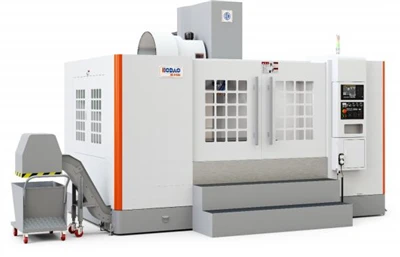
If you’re in the market for a VMC, or you’re dealing with vibration issues on your current machine, don’t guess at what’s wrong. Hit us up, and we can walk you through checking the basics, or help you find the right machine for your needs. We’re not here to pressure you—we’re here to make sure your machining runs smooth, your parts are perfect, and you don’t have to deal with that annoying shake every time you run a big cut.
Engraving and Milling Machine References
- Altintas, Y. (2012). Manufacturing Automation: Metal Cutting Mechanics, Machine Tool Vibrations, and CNC Design. Cambridge University Press.
- Schmitz, T. L., & Smith, K. S. (2009). Machining Dynamics: Frequency Response to Improved Productivity. Springer.
- Department of Defense. (2015). Metalworking Machine Tools: Vibration Measurement and Acceptance Criteria. Military Standard MIL-STD-1687A.
Taizhou Qiyang Trading Co., Ltd.
As one of the most professional vertical machining center manufacturers and suppliers in China, we’re featured by quality products and good price. Please rest assured to buy bulk vertical machining center for sale here and get quotation from our factory. Customized orders are welcome.
Address: Zhenhai Village, Binhai Town, Wenling City, Taizhou City, Zhejiang Province
E-mail: qycncmachine@outlook.com
WebSite: https://www.qycncmachine.com/
