If you’ve ever spent hours trying to stuff irregularly shaped goods into a one-size-fits-all shipping carton that’s too big, too small, or lumpy enough to risk damaging your items, you’ve probably asked the same question I hear from clients every single day: Are shipping cartons available in custom sizes? Shipping Carton

As a supplier who’s spent over a decade working directly with e-commerce brands, small business owners, and even industrial manufacturers, I can tell you the answer isn’t a simple “yes” or “no” — it’s a layered, practical yes, one that balances what your business needs, what makes financial sense, and what’s actually feasible for manufacturers to produce without cutting corners on quality. Let me break down how this works, why it matters more than you think, and how you can navigate custom carton sizing to save money and protect your goods.
First, let’s clear up a common misconception. When most people search “custom shipping cartons,” they picture ordering one-off, one-of-a-kind boxes for a single product line, and assume that will mean exorbitant minimum orders or 6-week lead times. While that was true for the industry 15+ years ago, modern corrugated manufacturing technology has completely changed that. Today, there’s a middle ground between generic stock cartons (the 10x8x6 inch boxes you grab by the hundred from big box office stores) and fully bespoke, single-use boxes. That middle ground is what most small to mid-sized businesses actually need, and it’s what I help clients access every week.
Let’s start with the basics: shipping cartons are almost always made from corrugated fiberboard, a material with a fluted inner layer that provides cushioning, glued between two flat outer linerboards. The size of the carton depends on three key dimensions: length, width, and depth, measured from interior edges (not the exterior, which includes the board’s thickness). For context, a standard stock box is only available in 1-inch increments, but custom sizing can get as specific as ¼-inch adjustments, which might sound trivial until you’re shipping glassware that shifts ½ an inch during transit.
Now, why would a business even need a custom carton size? I’ll give you an example from a recent client of mine: a small handmade candle brand that was selling 8-ounce soy candles in a 9x6x3 inch stock box. That box left 1.5 inches of empty space on all sides of the candle, so the brand had to add extra packing peanuts, which cost them an extra $0.12 per box in materials, added 0.2 lbs to each package (pushing them into a higher shipping rate with carriers like USPS or UPS), and even led to a few broken candles when the extra packing shifted during cross-country delivery. When we sized a custom box to exactly fit the candle, a 4x4x4 inch square, they eliminated all that extra filler, cut shipping costs by 18% per order, and dropped their damage rate from 2.1% to 0.3%. That’s not a minor win — that’s the difference between a business breaking even on shipping and turning a profit.
But custom sizing isn’t one-size-fits-all either. There are a few different types of custom carton options, and choosing the right one depends on how many boxes you need, how quickly you need them, and what your budget looks like. Let’s walk through each type, because this is where a lot of new business owners get tripped up.
The first, and most accessible for small orders, is “semi-custom” sizing. This is where a manufacturer like mine uses standard corrugated die-cut tools that already exist in the factory, and adjusts the dimensions slightly to fit your needs. For example, if a die cuts a 5x5x5 inch box, we can tweak it to 4.75x5x5 inches without needing to mill a new die, which cuts down on setup time and cost. The minimum order for semi-custom boxes is usually between 50 and 500, depending on the size, and lead times are typically 3 to 5 days — way faster than fully bespoke. Most of the clients I work with fall into this category: e-commerce brands that are growing out of stock boxes, seasonal small batches, or businesses shipping unique items like art, handmade goods, or electronics that don’t fit standard sizes.
The second type is fully custom sizing, which is when you need a size that doesn’t fit any existing die. This requires the manufacturer to create a new custom die, which is a metal-cutting tool that shapes the corrugated board into your specific box. The downside here is that setup costs for a new die can range from $150 to $500, depending on the complexity of the box, and the minimum order is usually 1,000 or more. But for businesses that are scaling up, or selling high-volume, unique products (like a yoga brand that ships custom-sized yoga block sets, or a medical supply company that ships specialized vials), the upfront die cost is a one-time expense that pays off in lower per-unit shipping and material costs over time.
Now, I know what you’re thinking: “This sounds great, but is custom sizing durable enough? I don’t want a box that collapses halfway to my customer’s door.” That’s a valid concern, and it’s one I address with every client who asks about custom cartons. The key here is matching the corrugated board’s “grade” and fluted size to your custom size, not just the dimensions. Fluted size refers to the ridges in the corrugated board: A-flute is thick and cushioning, good for heavy or fragile items; B-flute is smaller, stiffer, good for shipping flat items like books or apparel; E-flute is thin, good for small, premium boxes. When you order a custom size, a good supplier won’t just cut a board to your dimensions — they’ll calculate the burst strength (how much weight the box can hold) and edge crush test (ECT, how much pressure the edges can take) to make sure it meets your needs. For example, a 10x10x10 inch box holding 50 lbs needs a higher ECT rating than a 4x4x4 inch box holding 1 lb. I always include that calculation in my quotes, so clients never get a custom box that’s too flimsy for their products.
Another common question: Can you customize other things along with size, like printing or handles? Absolutely, but the lead times and costs go up when you add those, so it’s worth planning ahead. If you’re ordering semi-custom boxes, you can usually add basic printing (like your brand name) for a small extra cost, and lead times stay short. For fully custom boxes with full-color printing, you might be looking at 7 to 10 day lead times, but that’s standard in the industry.
Now, let’s talk about the hidden pitfalls of custom sizing, because not all suppliers are honest about these. The first pitfall is over-sizing. I’ve had clients come to me wanting a custom box that’s “just a little bigger” than their stock box, only to realize that even a ½ inch extra on each side adds up to 15% more material, which means higher per-unit cost and higher shipping weight. I always recommend using what’s called the “inner dimension calculator” when designing your custom box: measure your product’s length, width, height, then add ¼ to ½ inch on each side to leave room for wrapping or cushioning — not more. That small adjustment can save you 10-20% on material costs without risking damage.
The second pitfall is not accounting for the box’s closure. Most shipping cartons are either tuck-top (the standard top that folds closed and tucks into itself) or tape-required style. If you order a custom size, a supplier can design the tuck-top to fit exactly, so you don’t have to waste tape or struggle to close the box. A bad supplier will just cut a board to your dimensions and not adjust the closure, leading to boxes that are hard to seal and prone to popping open during transit.
The third pitfall is not ordering a sample first. No matter how good a supplier’s mockup looks on paper, always ask for a physical sample before placing a large order. I send free samples to all my custom clients (for the small semi-custom orders, anyway) so they can test how the box fits their product, how sturdy it is, and how easy it is to seal. I once had a client who ordered a custom box online from a different supplier, and when the sample arrived, the corners were crumpled because the board’s ECT rating was too low. They switched to me, and that’s the kind of quality check that makes all the difference.
Let’s also touch on sustainability, because that’s a big concern for most businesses now. A custom carton that fits your product exactly means less packaging filler, less material overall, and lower shipping emissions because the box is lighter. That’s not just good for your bottom line — it’s good for your brand’s reputation. Consumers are 73% more likely to choose a brand that uses sustainable packaging, according to a 2023 study by the National Retail Federation, so custom sizing is a win-win for your business and the planet.
So, how do you go about ordering custom shipping cartons? The process is simpler than you might think, especially if you work with a supplier who guides you through every step. First, gather all your product dimensions, plus any special needs (like weight, fragility, required printing, or lead time). Then, reach out to your supplier with that information, and ask them to explain the different sizing options, minimum orders, and costs. A good supplier will walk you through the pros and cons of semi-custom vs. fully custom, share sample sizes to test, and make sure you’re not overpaying for a size you don’t need.
I’ll leave you with one final story that sums up why custom shipping cartons matter. Last year, I worked with a small outdoor gear brand that was shipping custom-sized tent stakes in a generic 12x8x4 inch stock box. The stakes were 10 inches long, so they stuck out of the box’s top, leading to bent stakes during transit and hundreds of negative reviews. We sized a custom box to exactly 10x2x2 inches, added a small slot for the stakes to fit into, and eliminated all the damage. They ordered 5,000 fully custom boxes, the die cost was absorbed in the first 2,000 units, and their damage rate dropped to zero. They now source all their packaging from us, and last month they expanded to a new line of custom-sized sleeping bags.
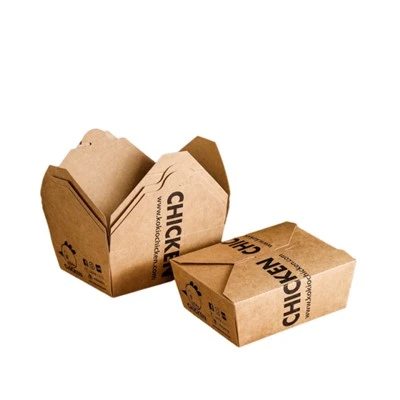
At the end of the day, custom shipping cartons aren’t just a luxury for big brands — they’re a practical tool for any business that wants to save money, protect their products, and keep their customers happy. If you’re tired of wasting money on over-sized stock boxes, dealing with damaged goods, or struggling to find a box that fits your unique products, I’d love to help you figure out the right custom size for your needs. Reach out to our team to discuss your project, and we’ll walk you through every step, from sample boxes to final delivery.
Clothing Box References
National Retail Federation. (2023). 2023 Sustainability in Retail and Packaging Report. Corrugated Packaging Council. (2022). Custom Sizing Best Practices for E-Commerce Shipping. UPS Supply Chain Solutions. (2023). Transit Damage Prevention: Packaging Standards for Small and Medium Businesses.
Dongguan Jinying Printing Co., Ltd.
As one of the most experienced shipping carton manufacturers and suppliers in China and Vietnam, we also support custom service and OEM service. Welcome to buy bulk luxury shipping carton at competitive price from our factory. If you have any enquiry about cooperation, please feel free to email us.
Address: No. 5, 1st Road, Jingshan Third Industrial Zone, Chashan Town, Dongguan City, Guangdong Province
E-mail: inquiry@dg-jinying.com
WebSite: https://www.gpspacking.com/
