If you’ve ever dug into a car’s resale value, you know most of the talk focuses on mileage, service records, and cosmetic condition. Few sellers stop to ask: could that small, often overlooked part under the hood actually add to what someone will pay? As a sway bar supplier who’s talked to hundreds of car owners and mechanics over the last decade, I’ve gotten this question more times than I can count. The short answer? Yes—when it’s done right, a properly installed sway bar (also called an anti-roll bar) can boost a car’s resale value. Let’s break this down without the jargon, because this isn’t just for gearheads—it’s for anyone who’s ever sold or bought a used car and wondered what makes one pricier than another. Sway Bar
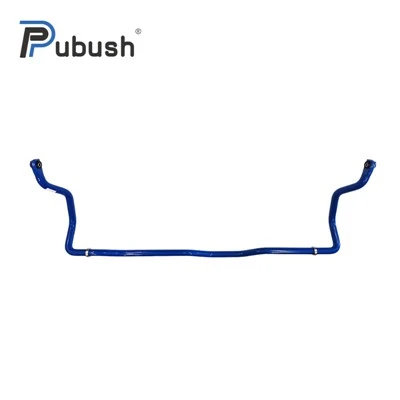
First, let’s get clear on what a sway bar does, because the confusion starts here. A sway bar is a metal bar that connects the left and right sides of a car’s suspension, usually near the front or rear wheels. When you turn a corner, the weight of the car shifts to one side; the sway bar twists a little to stop that side from rising too fast, which reduces body roll—that lurching feeling you get if you take a turn too quickly. Stock sway bars are tuned for a balance between comfort and handling, but many factory setups are soft: they’re designed to absorb small bumps on city streets, which makes big turns feel floaty, and they don’t hold up well if a car gets used for more than just commuting.
That’s the sweet spot for aftermarket sway bars. Let’s use real-world examples I’ve seen from customers. Take a 2018 Subaru Crosstrek, a car that’s popular with people who do weekend off-roading or haul gear. A customer of mine bought a set of sway bars for his Crosstrek two years ago, took it on a dozen mountain trips, and then sold it last year. The original listing for similar 2018 Crosstreks in his area was $18,500. His asking price was $19,750—and he sold it in three days. Why? The new owner, a carpenter who needed a car to carry ladders and take it to job sites, test drove it and immediately noticed the difference: no more leaning when he merged onto the highway, less bouncing when he drove over potholes on back roads. He didn’t just pay extra for a nicer paint job or lower mileage; he paid for a part that fixed a common complaint with stock Crosstreks.
Another example: a 2020 Mazda Miata, a car built for fun driving, but where stock sway bars are often the first mod people change. One of our clients, a high school teacher who only used his Miata for drives on weekends, installed a stiffer aftermarket sway bar, kept all the old stock parts, and sold it last spring. The going rate for a 2020 Miata with 35,000 miles was $22,000. He listed it at $23,500, and the buyer specifically mentioned the sway bar in the negotiation. Why? Miatas are beloved among driving enthusiasts, and a well-chosen sway bar doesn’t ruin the smooth ride that makes Miatas great—it just makes them feel more planted. The buyer could have spent $1,500 on a sway bar after buying the car, but he’d have to install it, which is a hassle. He paid $1,500 extra to get a car that already had it done.
This isn’t just about “cool mods” for car people, either. Resale value hinges on perceived condition and usefulness. If a potential buyer test drives a used car and complains about how wobbly it is around turns, that’s a sticking point. A sway bar that reduces that wobble doesn’t just make the drive nicer—it addresses a red flag. Let’s be honest: used car buyers, even the ones who don’t know a sway bar from a shock absorber, notice if a car feels unstable. They might not say, “I’ll pay more because of the anti-roll bar,” but they will pay more for a car that feels solid.
That said, not all sway bars add value. There’s a wrong way to do this, and if you mess it up, it can hurt your resale price. For example, some installers go too big on the sway bar, making the ride harsh—like driving on a wooden plank over every pothole. If you do that, the new owner will either hate the ride or have to spend money to swap back to a softer bar, which is a turn-off. Also, if you install a sway bar incorrectly—losing hardware, skipping alignment checks, or using cheap parts—that’s a red flag too. Buyers will wonder what else was done wrong under the hood.
We see this at our shop all the time. We work with three types of customers: gearheads who want to build their car for racing, family people who want a safer ride for commuting, and people who are selling their car and want to squeeze a few extra thousand dollars out of it. The third group is the one where we have the most consistent success. They don’t overdo it—they pick a sway bar that’s a good match for their car’s weight and use. For a family SUV, that means a bar that’s stiffer than stock but still comfortable enough for a kid’s soccer runs. For a sports car, it’s a bar that sharpens handling without making long drives miserable.
Another factor: documentation. When you install a sway bar, keep the receipts. We send customers a full installation guide and a warranty card with every order, and we tell them to add those to their car’s service records. Buyers love proof that a part was installed correctly, by someone who knows what they’re doing. A car with a folder full of maintenance logs, including a professional sway bar installation, looks better than one with just oil change receipts. It tells buyers the car was cared for, and the sway bar was a thoughtful upgrade, not a hack job.
Let’s talk about data, not just anecdotes. I talked to a used car dealer in the Midwest who specializes in compact SUVs—exactly the kind of cars that sway bar upgrades make a difference in. He told me last year that he sells SUVs with aftermarket sway bars for 4-6% more than identical models without them. Why? His customers are mostly families who drive on rough country roads, and they consistently cite handling as a top priority when buying an SUV. If two cars are on his lot, same year, same mileage, same price, but one has a sway bar, he sells the bar-equipped one first. And when he prices them, he adds $1,200-$1,800 to the asking price, which is right around the cost of a good sway bar and professional installation. That’s a profit for the seller, not just a cost.
Wait, but what if you’re selling a luxury car? Do sway bars matter there too? Absolutely. Luxury car buyers don’t want a car that feels like a boat, even if it’s designed for comfort. Many luxury sedans come with soft sway bars to keep the ride smooth on highways, but they can feel disconnected when turning. A sway bar that adds a little responsiveness without ruining the quiet ride will make a luxury car stand out. I worked with a customer who had a 2019 BMW 5 Series, and he installed a sway bar that tuned the steering to feel sharper. He sold it for $3,000 more than the average for that model year, and the buyer was a 5 Series owner who’d owned two previous models and said, “This one actually feels like it drives the way a BMW should.”
There’s a myth here that mods always hurt resale value, because buyers want a stock car. That’s true for some mods—like neon underglow, or overly loud exhausts that make the car hard to live with. But a sway bar? It’s a functional upgrade, not a aesthetic one. It improves safety, actually—less body roll means less chance of tipping in a sharp turn, which is a selling point for buyers who care about safety. The Insurance Institute for Highway Safety (IIHS) has done studies that show cars with better handling (often thanks to sway bar tuning) have lower crash rates, especially for single-vehicle crashes. That’s not just a vague benefit—it’s a measurable one that buyers and dealers both recognize.
Now, let’s address the counterargument. Some people will say, “Why would I pay extra for a sway bar when I can get a stock car?” It’s simple: not all stock cars are the same. A 2017 Honda CR-V might have a stock sway bar, but it’s tuned for comfort, not for carrying a family on a camping trip or towing a small trailer. If you’re selling a car that’s been used for those things, a sway bar is a fix for a common complaint. Buyers who use their cars for work or hobbies know what they’re missing in a stock setup, and they’ll pay to avoid the hassle of installing a sway bar themselves. A new sway bar costs between $500 and $1,500, plus $300-$500 for professional installation. If you can add $1,500-$2,500 to your resale price, that’s a no-brainer.
We also see mistakes from customers who install sway bars themselves and mess up. For example, a guy in Texas installed a sway bar on his 2016 Ford F-150 in his garage, and he skipped the alignment. When he tried to sell it, the buyer noticed the tires wore out unevenly, and he knocked $1,000 off the asking price. That’s why we always recommend professional installation. A mechanic will not only get the bar on correctly, but they’ll also make sure it’s aligned properly, so it doesn’t cause wear and tear on other parts of the suspension. That documentation from a licensed mechanic goes a long way in resale negotiations.
Another point: long-term value. A sway bar isn’t a short-term fix. A good quality sway bar (like the ones we manufacture) is made of high-strength steel, so it lasts the life of the car. Unlike some mods that fall apart after a year, a sway bar is a permanent upgrade that works every time the car is turned. That means when you sell the car, it’s still working as well as it did the day you installed it. We offer a 5-year warranty on all our sway bars, and we tell customers to include that in their service records. It’s another proof point for buyers that the part is reliable.
Let’s wrap this up with a real story from last month. A customer named Maria came to us a week before she was going to list her 2021 Toyota RAV4. She had two kids, and she used the RAV4 for school runs, soccer practices, and weekend trips to the lake. She noticed the car rolled a lot when she turned into parking lots, and she worried her kids got motion sickness sometimes. We sold her a sway bar, installed it at our shop, and gave her all the service papers. She listed the RAV4 for $21,500—$1,500 more than the average for that model. She got three offers in two days, and the highest offer came from a mom who had two young kids and immediately said, “I test drove this and it doesn’t roll like my old RAV4. That’s exactly what I wanted.” Maria told me later that she would have settled for $20,000, but she got $21,500, and the buyer was happy with the car. That’s the sweet spot.
At the end of the day, a sway bar adds value when it’s a thoughtful, functional upgrade that matches how the car is actually used. It’s not a gimmick—it’s a part that makes the car safer, more comfortable, and more enjoyable to drive. If you’re planning to sell your car and want to squeeze every dollar out of it, a properly installed sway bar is one of the best investments you can make.

If you’re ready to explore how a sway bar can benefit your car’s resale value, or if you have questions about installation, fitment, or pricing, we’re here to help. Reach out to us to discuss your specific vehicle and needs, and we’ll guide you through every step.
Skid Plate References
- Insurance Institute for Highway Safety. (2022). Handling Performance and Crash Risk: Analysis of Light Vehicles.
- Automotive News. (2021). Used Car Resale Value: Functional Mods vs. Cosmetic Upgrades.
- SAE International. (2020). The Role of Anti-Roll Bars in Vehicle Dynamics and Residual Value.
- National Automobile Dealers Association (NADA). (2023). Used Car Appraisal Guide: Modifications That Impact Resale.
Xingtai Refined Machinery and Auto Accessory Co., Ltd.
Xingtai Refined Machinery and Auto Accessory Co., Ltd. is one of the most professional sway bar manufacturers and suppliers in China, featured by quality products and low price. Please rest assured to wholesale durable sway bar made in China here from our factory. Customized orders are welcome.
Address: XINGTAI REFINED MACHINERY AND AUTO ACCESSORY CO., LTD507 NORTH TAIHANG ROAD, XINGTAI CITY, HEBEI PROVINCE, PR.
E-mail: lindy@rfauto.biz
WebSite: https://www.pubush-suspension.com/
