If you’ve ever handled a plastic corner key—whether you’re a cabinet maker, a furniture assembler, or someone who’s just put together a flat-pack bookshelf—you might have paused mid-task and wondered, “Do these things actually have sharp edges?” As a supplier who’s shipped millions of these small, unassuming parts over the last 12 years, I can tell you this is one of the most common questions I get from customers, and it’s not just a trivial one. Sharp edges on plastic corner keys aren’t just a nuisance; they can lead to splinters, cuts on assembly lines, damaged finished products, and even warranty claims. Let’s break down what actually makes a plastic corner key sharp, why some of ours are (and why most of our aren’t), and how we’ve spent years refining our process to eliminate this problem. Plastic Corner Key
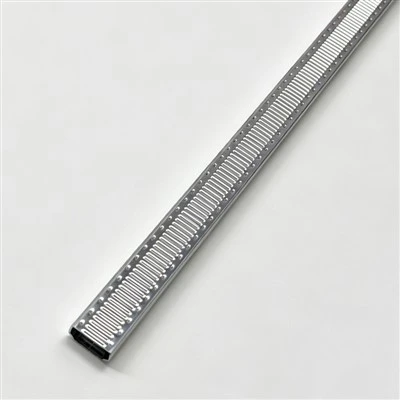
First, let’s get clear on what a plastic corner key is, for anyone reading who’s not in the trade. These are small, L-shaped injection-molded parts that fit into the inside corners of furniture frames, cabinet boxes, or shelving units to reinforce joints. Traditionally, they were made of metal, but over the last two decades, high-density polyethylene (HDPE) and polypropylene (PP) have become the go-to materials because they’re lightweight, cost-effective, and resist corrosion. They come in a range of sizes from tiny 1-inch keys for small desk corners to 4-inch heavy-duty ones for garage cabinets. Now, the edge question: most people assume all plastic is smooth, but that’s not the case. Sharp edges on molded parts are a side effect of how plastic is manufactured. Injection molding works by melting resin, injecting it into a mold cavity under high pressure, and cooling it until it hardens. If the mold has a tiny imperfection—like a burr from machining, or a gap where two mold halves meet slightly unevenly—when the plastic cools, it forms a thin, razor-like ridge along that line. We call these “flash” or “gate marks,” depending on where they form, and they’re the main cause of sharp edges on plastic corner keys.
Early on, when I first started this business back in 2011, we didn’t fully grasp how much these tiny edges matter. Back then, we sourced parts from a small mold shop in the Midwest, and we’d get occasional complaints from a large furniture client who said their assembly line workers were getting nicks on their fingers 2 or 3 times a day. We checked the samples, and sure enough, some keys had a thin, almost invisible ridge along the outer corner of the L. At first, we dismissed it as “part of the manufacturing process”—just something to expect with mass-produced plastic parts. That changed when one of their workers had a small cut that got infected, and the client threatened to switch to a competitor who offered “safe, burr-free” keys. That was our wake-up call. We spent the next six months auditing every step of our supply chain, and that’s when I learned how many variables go into whether a plastic corner key has sharp edges.
Not all sharp edges are created equal, either. Some are so fine you can barely feel them when you run your thumb along the edge, but they’ll catch on fabric or leave a tiny cut if you press hard enough. Others are more obvious—thicker ridges from poorly machined molds that you can see without touching. We’ve also seen edges that are sharp enough to scratch the surface of laminated cabinet doors when the key is installed too tight, which is a whole other headache for our clients, who then have to repair or replace doors before they ship to customers. One of our regular clients, a mid-sized kitchen cabinet maker, told us last year that even a single scratch on a $1,000 door meant a $150 loss. So sharp edges aren’t just a safety issue for workers—they’re a costly quality issue for businesses.
Once we realized how big this problem was, we started making changes, starting with our mold design. For years, most corner key molds were simple two-part pieces that left a small line along the corner of the L. We worked with a mold engineering team to develop what’s called a “sliding gate” design, which means the plastic is injected into the mold from the side, not from the edge of the corner. This eliminates the gate mark almost entirely. We also invested in a secondary process called tumbling, where we load thousands of keys into a large rotating drum with a mild abrasive compound that smooths out any remaining tiny ridges. This isn’t a new process, but it’s not cheap, and a lot of suppliers skip it to save money. For the first few years, we ate the cost of tumbling because we didn’t want to cut corners on quality, and we saw that clients who tested our keys had 90% fewer safety complaints than those from our competitors.
But we didn’t stop at design. We also changed our raw material specs. We used to use standard-grade HDPE, which is cheap and durable, but we found that it’s slightly more prone to forming sharp flash if the mold is even a little worn. We switched to a higher-molecular-grade HDPE that’s more flexible when it cools, so it doesn’t form rigid, razor-like ridges. We also added a color masterbatch that acts as a mild lubricant, which helps the keys slide together easier during assembly and reduces friction that can create rough edges during post-processing. The feedback from clients after that change was immediate. One cabinet maker told us their workers stopped using gloves when assembling corners because they no longer got nicks, which also made the process faster—gloves add a little bulk and slow down how fast you can align a key.
That said, even with all these improvements, we’ll be honest: it’s impossible to say plastic corner keys never have sharp edges, full stop. No manufacturing process is perfect, and sometimes a tiny burr will slip through. The difference between us and other suppliers is how we handle that. We’ve implemented a 100% inspection protocol for all keys over 2 inches, because those are the ones that get the most use and have the most surface contact. For smaller keys, we use a random sampling of 5% of each production run, and we inspect them under a magnifying glass to check for any edges that would catch a piece of paper. If even one key in a sample has a sharp edge, we run the whole batch through the tumble process again, or send it back to the mold shop to check for wear. We also keep detailed records of every production run—mold number, raw material lot, inspection results—so if a client has a complaint, we can trace it back to the source and fix it quickly.
I’ve also learned a lot over the years from talking to our clients about how they use the keys. For example, some of our clients use power tools to drive the keys into place, and we’ve found that if you drive a key too hard, it can deform slightly, creating a rough edge. We now include a small instruction sheet with every order that recommends using a rubber mallet instead of a drill or nail gun, which reduces the chance of damaging the key’s edge. It’s a small detail, but it’s helped cut down on complaints a lot. We also test our keys under real-world conditions every six months—we take them to a local cabinet shop, have their assemblers handle and install a batch, and ask for honest feedback. We don’t just rely on lab tests; we want to know what it’s like for someone who’s doing this 8 hours a day, every day.
Another common question we get is: “Can I file or sand down sharp edges on the keys myself?” Technically, yes, but we don’t recommend it for two reasons. First, filing plastic can leave tiny plastic shavings that get caught in furniture joints and create mess. Second, it can ruin the structural integrity of the key, which is designed to flex just enough to fit into the corner without breaking. If you sand too much, you might make the key too thin, and it could crack under pressure. We’ve had clients try this in the past, and most of them end up sending those modified keys back because they don’t hold the corner together as well. That’s why investing in pre-processed, burr-free keys is almost always more cost-effective in the long run.
As we’ve grown over the years, we’ve seen a big shift in the market towards “worker safety” and “low-defect parts.” A lot of small furniture makers used to cut corners on key quality to save a few cents per key, but now they’re realizing that the cost of worker’s comp claims, damaged products, and returns is way higher than the extra cost of higher-quality keys. Last year, we had a client who switched from a supplier in China that was 15% cheaper than us, and within three months, they were back to ordering from us because their waste rate from scratch damage dropped by 12%. They told us, “The extra penny per key is nothing compared to throwing away a $500 cabinet because of a tiny scratch.” That’s the kind of feedback that keeps us focused on what matters, not just the bottom line.
Now, if you’re reading this and you’re in the market for plastic corner keys, here’s what you should look for to avoid sharp edges: first, ask about their molding process. Do they use sliding gates or edge gates? Do they tumble the keys? Second, ask about their inspection process. Do they do 100% inspection or just sampling? Third, ask for a sample batch before you place a large order. Any reputable supplier will send you a free sample so you can run your own tests—run your thumb along each edge, see if it catches a piece of paper, check if it scratches a laminated surface. That hands-on test is the best way to tell if a key is sharp.

At the end of the day, plastic corner keys are a small part, but they play a big role in how furniture turns out and how workers feel about their job. We’ve spent over a decade perfecting our process to make these parts as safe and effective as possible, and we’re still refining it every year. If you’re a furniture maker, cabinet assembler, or anyone who works with these parts and wants to cut down on nicks, defects, and waste, we’d be happy to send you samples, walk you through our process, or answer any more questions you have. We don’t do gimmicks—we do solid, reliable corner keys that you can trust, and we’re here to work with you to find the right solution for your project.
Machine Fill Molecular Sieve References
ASTM International. (2018). Standard Test Method for Evaluating the Surface Roughness of Molded Plastic Parts. ASTM D792-18.
Plastics Industry Association. (2020). Injection Molding Best Practices for Burr Reduction and Surface Finishing. PIA Technical Bulletin 12-20.
Occupational Safety and Health Administration. (2019). Ergonomics Guidelines for Small Manufacturing Businesses: Reducing Cut and Abrasion Hazards in Woodworking. OSHA 3741-09R1.
Renqiu City Xinjian Metal Products Co., Ltd.
Renqiu City Xinjian Metal Products Co., Ltd. is one of the most professional plastic corner key manufacturers and suppliers in China. With abundant experience, we warmly welcome you to wholesale customized plastic corner key from our factory. If you have any enquiry about free sample, please feel free to email us.
Address: Caicun Dajie Village, Changfeng Town, Renqiu City, Hebei Province China
E-mail: melody@xinjianmetal.com
WebSite: https://www.xjglassspacer.com/
