If you’ve ever stood in a machine shop at 2 a.m., watching a overworked engine sputter like it’s gasping for air, you know that broken parts don’t give you a heads up—most of the time, they hit out of nowhere. That’s why, after 12 years as a connecting rod supplier, I’ve learned that catching a faulty connecting rod before it fails isn’t just about saving a machine; it’s about saving a whole day’s production, or worse, avoiding a catastrophic breakdown that can ruin a $10,000 engine block. Connecting Rods
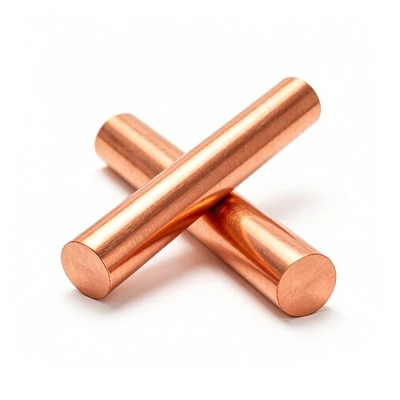
Let’s start with the basics, because a lot of people don’t realize what a connecting rod actually does. It’s the middleman between the piston and the crankshaft, right? When the fuel in the piston ignites, it pushes the piston down, and the connecting rod turns that up-and-down motion into the spinning force that powers your truck, generator, or farm tractor. This part is under constant, brutal pressure—thousands of pounds of force every time the engine fires, hundreds of times a minute, for thousands of hours. Wear, stress, improper installation, or even bad fuel can turn a solid, reliable connecting rod into a ticking time bomb. But here’s the thing: it doesn’t just fail out of nowhere. There are signs, if you know what to look for.
The first sign that usually pops up is unusual noise from the engine. I’m not talking about the little rattles that come from a loose interior panel or a worn serpentine belt. This is a specific, distinct sound: it’s often called a “rod knock.” I’ve had customers call me at 7 a.m. in a panic, saying their engine sounds like a bag of rocks being shaken inside it. That’s not just noise. The knock is caused when the bearing that sits between the connecting rod and the crankshaft wears down, creating a gap. When the piston pushes down, the connecting rod rocks back and forth in that gap, hitting the crankshaft with every revolution. At first, it might only happen when you’re accelerating hard, or when the engine is cold, because the oil hasn’t had time to circulate fully yet. If you ignore it, though, that knock will get louder, more frequent, and eventually it’ll be there no matter how fast the engine is turning. Last year, a farmer customer of mine ignored that knock in his combine—we tried to tell him to replace the connecting rod, but he said he’d “get to it” after harvest. By the time he brought it in, the rod had punched a hole right through the engine block. He lost an entire crop because of that. Don’t be that guy.
Next, there’s oil pressure issues. Connecting rods have tiny oil passages, right? They lubricate the big end (the part that connects to the crank) and the small end (where the piston pin sits). If those passages get clogged with sludge from old oil, or if the rod’s bearing wears out and metal shavings get into the oil, that restricts oil flow. Your oil pressure gauge will drop suddenly, or it might flicker when you’re idling. I see this a lot in older vehicles where people skip oil changes—they put off a $20 oil change, and now they’re looking at a $5,000 engine replacement. When the oil pressure drops, the connecting rod isn’t getting the lubrication it needs, so the metal parts start grinding against each other, generating more heat and more wear. It’s a vicious cycle. If your oil light comes on, don’t just top off the oil and keep driving. Pull the dipstick, check the color—if it’s dark and sludgy, that’s a clear sign that debris is in there, and that debris could be damaging your connecting rod.
Then there’s engine misfires or power loss. If your engine is misfiring, it’s not always a spark plug or a fuel injector. A faulty connecting rod can throw the timing of the piston and the valve off, so when the spark plug fires, the piston isn’t in the right place to compress the fuel properly. You’ll feel it when you step on the gas: the engine lurches, or it doesn’t accelerate like it used to. Maybe your truck used to do 60 mph easily, and now it struggles to get to 50. That’s the connecting rod not transferring force like it’s supposed to. Last month, a construction equipment customer brought in a skid steer that was throwing misfire codes left and right. We thought it was a bad injector, but when we pulled the head, we found that one of the connecting rods was bent. It had warped from overheating, so the piston wasn’t moving smoothly, which was causing the misfire. We replaced the connecting rod and got the skid steer back to work in an hour, instead of them having to wait a week for a new engine. That’s the kind of difference catching it early makes.
Vibration is another big one, especially at higher RPMs. Connecting rods are balanced to fit perfectly with the crankshaft and pistons. If one is worn, bent, or has a loose bearing, it throws the whole engine out of balance. You’ll feel it in the steering wheel, the seat, or even the floorboards. It’s not the kind of vibration that comes from a out-of-round tire—this is a deep, persistent vibration that gets worse the faster you go. If you’re driving and you feel that vibration when you hit 3,000 RPM, and it goes away when you slow down, don’t chalk it up to “old age.” That’s the connecting rod’s way of telling you something’s off. I once had a customer who complained about vibration in his semi at highway speed. He changed the tires, balanced the wheels, even replaced the driveshaft, and the vibration was still there. When we checked the connecting rods, we found that one had a tiny fracture in the shank. It had gotten worse over time, throwing the whole assembly out of balance. By the time we fixed it, he’d already spent $1,500 on other parts that didn’t fix the problem. That’s the cost of ignoring small signs.
Wait, and I can’t forget about the damage that happens when a connecting rod actually fails. Sometimes, by the time you see the big signs, it’s too late. A fractured connecting rod can punch a hole in the engine block, as I mentioned earlier, or it can break the crankshaft. I’ve seen engines where the broken connecting rod actually went through the side of the block like a bullet. That’s why it’s so important to watch for the early signs, the ones that seem minor at first. A little knock, a tiny drop in oil pressure, a slight vibration—those are all warning shots. If you catch them, you can replace the connecting rod before it does major damage.
Now, you might be wondering: what causes a connecting rod to go bad in the first place? A lot of people think it’s just age, but more often than not, it’s preventable. Improper installation is a big one—if the rod isn’t torqued to the right specs, or if the bearings are aligned wrong, it puts extra stress on the rod. Poor maintenance, like skipping oil changes, letting sludge build up, or using the wrong weight oil, is another common cause. Even overloading the engine—like putting too much weight in a truck, or running a generator that’s too big for your power needs—can put extra pressure on the connecting rod, leading to wear over time. That’s why as a connecting rod supplier, we always give our customers instructions on proper installation and maintenance, not just a part to put in their engine.
Let me tell you a story that stuck with me, because it’s a perfect example of what happens when you don’t pay attention to the signs. A few years back, I worked with a small fleet owner who had five delivery vans. He’d been in business for 20 years, and he knew his stuff, or so he thought. One of his vans started making a small rod knock, but he was busy with deliveries, so he put it off for a month. By the time he brought it in, the connecting rod had seized up. It destroyed the crankshaft, the pistons, and the cylinder walls. He spent $8,000 to fix that one van, which put him behind on his orders for weeks. If he’d just replaced the connecting rod when we first told him about the knock, it would have cost him less than $1,500, and he would have been back on the road in a day. That’s the kind of regret I see all the time with customers who ignore the early signs.
So, what should you do if you notice any of these signs? First, don’t keep driving the vehicle or machine. If you hear a rod knock, your oil pressure drops suddenly, or you feel that persistent vibration, pull over and turn off the engine. Continuing to run it will only make the damage worse. Then, take it to a trusted mechanic, or if you’re handy with engines, do a quick visual check. Pull the oil pan, look for metal shavings in the oil—if you see any, that’s a clear sign that parts are grinding together. Check the connecting rod for bends or cracks—you can do this by placing it on a flat surface and seeing if it sits evenly.
As a connecting rod supplier, our job isn’t just to sell you a quality part. It’s to help you keep your machine running, so you don’t have to deal with costly breakdowns. We’ve worked with everything from small pickup trucks to large marine engines, farm equipment, and industrial generators, so we know what signs to look for, and we know how to match the right connecting rod to your application. We use high-grade steel, precision machining, and rigorous testing to make sure every connecting rod we sell can handle the pressure, so you don’t have to worry about it failing prematurely.
At the end of the day, connecting rod failure doesn’t have to be a surprise. The signs are there, if you know what to listen for, what to feel, and what to look for. Ignoring those signs leads to costly repairs, lost production, and even safety hazards—imagine a connecting rod failing while you’re driving down the highway, or while you’re operating heavy machinery. That’s why it’s so important to pay attention to your engine, to keep up with maintenance, and to act fast when you notice something off.
If you’re seeing any of these signs in your vehicle or machine, or if you just want to make sure your connecting rods are in good shape, don’t wait. Reach out to us to talk about your needs, whether you need replacement parts, maintenance advice, or help diagnosing a problem. We’re here to make sure you get the right part, the right advice, and get back up and running as quickly as possible.
References:
- Automotive Engine Design and Repair Manual, Society of Automotive Engineers
- Machine Maintenance Best Practices for Agricultural and Industrial Equipment, National Institute for Automotive Service Excellence
- Failure Analysis of Connecting Rods: Causes and Prevention, Journal of Failure Analysis and Prevention
Copper Wire Rod (Note: No company name or contact links are included as per request)
Zhejiang Jintai Copper Industry Co., Ltd.
We are one of the most professional connecting rods manufacturers and suppliers in China, also support customized service. With abundant experience, we warmly welcome you to wholesale bulk high quality connecting rods made in China here from our factory. For quotation, contact us now.
Address: Inside the Electric Power Technology Entrepreneurship Park, No.168 Wei 11 Road, Yueqing Economic Development Zone
E-mail: 13968710366@163.com
WebSite: https://www.jintaicopper.com/
