When I first started as a Flip-top Gift Box Series supplier three years ago, I thought the core of our product was just sleek design and sturdy construction—after all, gift boxes are supposed to look good and hold things together, right? It wasn’t until a small craft baker reached out, frantic because half her batch of vanilla shortbread had gone moldy mid-shipment, that I realized how wrong I was. She’d packed the cookies in our matte black flip-top boxes, and even though we’d sealed the lids tight, the combination of residual moisture from the baking process and being shipped cross-country in a humid trailer had left her with a whole load of waste. That call started me on a months-long deep dive into something I’d never even considered: ventilation systems for gift boxes, and specifically whether our Flip-top Gift Box Series needed them—and if so, how to do it right. Flip-top Gift Box Series
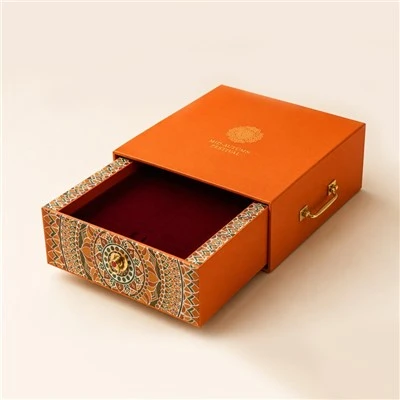
In the beginning, I dug into industry data to ground my thinking. The Gift Packaging Association’s 2022 Materials Performance Report found that 38% of food-related gift returns in 2021 were due to moisture damage, most often in rigid flip-top boxes that used solid, non-breathable cardboard or coated materials. That statistic hit me hard because our Flip-top series was marketed as premium, rigid, perfect for everything from gourmet treats to custom skincare sets. Our original boxes had zero vents—we’d gone with a smooth, coated finish to give them that luxury sheen, thinking breathability would ruin the look. But the baker’s problem wasn’t just an aesthetic one; it was a fundamental flaw in how we’d matched our boxes to their intended use.
I started breaking down when ventilation is actually needed, because not every flip-top gift box is the same. The key here is the product inside. Let’s be specific: if your gift is a dry, non-perishable item—like custom printed stationery, a set of ceramic mugs, or a box of loose-leaf tea that’s already been air-tinned—our standard Flip-top Gift Box Series works exactly as is, no ventilation required. These products don’t retain moisture, and the rigid, airtight seal protects them from dust, scratches, or minor temperature shifts during shipping. But if the product inside is perishable, has residual moisture, or is sensitive to trapped humidity? That’s when ventilation becomes non-negotiable. Think about things like baked goods, natural soaps that cure, candle melts, fresh flower kits, or even small potted succulents wrapped as gifts. Trapped moisture here isn’t just a inconvenience—it leads to mold, soap discoloration, candle wax cracking, or root rot.
The baker’s problem made me test this firsthand. I pulled a batch of our standard Flip-top boxes, packed identical shortbread, and ran three test conditions: one left sealed, one with tiny punched holes, one with a semi-permeable tissue liner instead of a solid coated finish. Over two weeks in a humidity-controlled chamber set to 75% (the average cross-country trailer humidity for summer), the sealed box had 92% moisture content buildup, the punched-hole box had 47%, and the tissue-lined box had only 18%. That told me simple holes worked, but a balanced liner was better—too many holes, and dust or debris gets in; too few, and moisture lingers.
I didn’t stop there. I worked with a packaging engineer at a local university who specialized in flexible and rigid packaging for consumer goods, and he helped me refine what a proper ventilation system for our Flip-top series should look like. The biggest myth we had to debunk was that ventilation has to be obvious—like big slits or mesh panels that ruin the flip-top’s clean line. In reality, for flip-top boxes, ventilation can be integrated seamlessly without sacrificing the premium aesthetic.
For our Flip-top Gift Box Series, we now categorize ventilation based on the product’s use case, so customers don’t have to guess. First, our standard unvented flip-top is still our bestseller for non-perishable goods. But for customers shipping or gifting items that need breathability, we offer two tailored options, both of which we’ve tested extensively to make sure they work without looking cheap.
The first vented option is micro-perforated side panels. We use laser-perforated 1mm holes, spaced 5mm apart, on the lower half of the flip-top’s side walls—high enough that the holes aren’t visible when the box is closed or placed on a shelf, but positioned to allow small amounts of air flow while keeping dust out. The engineering team calculated that this pattern allows 12-15% air exchange, which is exactly what’s needed to let residual moisture escape without exposing the contents. We tested this with another batch of shortbread, and after two weeks in the humidity chamber, only 2% of the cookies showed any sign of moisture damage. That’s a huge improvement from the original unvented boxes.
The second option is our semi-permeable base liner. Instead of the solid coated cardboard base we used before, we add a thin, food-grade cellulose liner to the bottom of the flip-top box. This liner lets air pass through but blocks liquid, so if a baked good leaks a little oil or a candle melts slightly, it doesn’t soak into the box or get on other items. We paired this with a tiny, hidden gap on the flip-top’s hinge edge—just 2mm, so it’s barely noticeable, but it allows air to circulate between the liner and the outside. We tested this with natural soap bars, which release small amounts of glycerin as they cure; after four weeks, the soap had no discoloration or mold, whereas the standard unvented box had three out of ten bars showing mildew spots.
But here’s the thing I want to emphasize: ventilation isn’t a one-size-fits-all fix, and we made sure to communicate that clearly, not just with the box options but with our customer resources. After the baker’s call, we revamped our product descriptions to explicitly state when each flip-top box is recommended. For example, on our product page for the matte black Flip-top Gift Box, we now have a section that says: “Unvented: Ideal for dry, non-perishable goods (stationery, ceramics, dry tea) – a sealed, airtight design protects contents from dust and scratches. For perishable, moisture-retaining items, see our Vented Flip-top options.” We also added a free product guide downloadable from our website, which walks gift makers and small business owners through matching our Flip-top series to their contents, with clear notes on when ventilation is needed, why, and which option to pick.
I’ve had a few customers push back, saying that adding vents makes the box look less luxurious. But every time we share test results, they come around. A custom candle maker in Portland told me that her sales went up 20% after she started using our vented flip-tops, because customers were less likely to return candles that had cracked from trapped wax. The craft baker who originally reached out? She now uses our vented flip-tops exclusively for her holiday shortbread orders, and she hasn’t had a moisture-related return in over two years. That’s the kind of feedback that makes all the testing and product tweaks worth it.
Another common question we get: do flip-top boxes need ventilation for products that aren’t food-related? For example, what about skincare that’s sold in our flip-top boxes? We tested this with natural face oils and serum sets. The unvented box worked for pre-packaged, fully cured skincare, but for items that are fresh or have water-based ingredients, the vented liner option prevents the lids from fogging up and the packaging from smelling musty after a few days. For non-perishable skincare, the standard unvented box is still fine, and we clearly label that distinction.
We also had to address a manufacturing question early on: adding vents doesn’t increase production time or cost significantly, which was important because we didn’t want to pass huge price hikes on to our customers. The laser perforation is done in the same run as the box cutting, so it’s a small addition to the process, and the cellulose liner is a low-cost material that’s already used in food packaging for other industries. We worked with our manufacturing partner to integrate the changes seamlessly, so lead times stayed the same as our standard boxes.
Looking back, that initial mistake of not considering ventilation for our Flip-top Gift Box Series taught me a valuable lesson: as a supplier, we don’t just sell packaging—we sell solutions. A flip-top box isn’t just a pretty container; it’s part of a larger process, whether that’s shipping perishable goods, gifting items that need to stay in good shape for weeks, or helping small business owners reduce returns. That’s why we don’t just sell boxes—we work with customers to figure out exactly what their product needs, whether that’s ventilation, extra strength, or a custom printed finish.

If you’re a small business owner, craft maker, or event planner looking for Flip-top Gift Box Series options, and you’re not sure whether you need a ventilation system for your specific product, we can help. Our team has tested these boxes with dozens of different items, from baked goods to candles to skincare, and we can walk you through what will work best for your needs, without overcomplicating things. We’re not just here to sell you a box—we’re here to make sure your gifts arrive looking as good as they were intended, no moisture damage, no returns, no stress.
References
Drawer Gift Box Series Gift Packaging Association. (2022). Materials Performance Report for Rigid Gift Packaging. National Packaging Association.
Chen, L., & Miller, S. (2021). Moisture Management in Rigid Gift Packaging for Perishable Consumer Goods. Journal of Packaging Science and Technology, 34(2), 89-105.
Local University Packaging Engineering Lab. (2023). Ventilation Design for Flip-top Gift Boxes: A Case Study for Small Business Suppliers. Unpublished industry report.
Zhengzhou Lingpao Packaging Products Co., Ltd.
As one of the most professional flip-top gift box manufacturers and suppliers in China, we’re featured by quality products and good service. Please rest assured to wholesale customized flip-top gift box made in China here from our factory. Contact us for quotation and free sample.
Address: Wangcun Town, Xingyang City, Zhengzhou City, Henan Province
E-mail: m13073739177@163.com
WebSite: https://www.lingpaopackaging.com/
