Hey there, let’s cut straight to the chase: if you’re in industrial tools, automotive repairs, woodworking, or any field that uses drill bits, impact wrenches, or socket sets, you’ve probably stared at a weird shank shape and thought, “Wait, how am I supposed to make this work?” Shank Adapters

I’ve been in the shank adapters game for like 7 years now—running a small supplier that lives and breathes matching parts to messy, real-world needs—and this question comes up every single week: Are there adapters for different shank shapes? The short answer is YES, but there’s way more to it than just grabbing any random adapter from the hardware store. Let’s break this down like we’re chatting over a coffee at the trade show floor, no corporate jargon allowed.
First, let’s get on the same page about what a shank actually is, because half the confusion starts here. The shank is that skinny, usually unthreaded part of a tool that inserts into the chuck, impact wrench, or power tool. It’s what transfers torque, so if it doesn’t fit right, you’re either going to strip it, break a bit, or just waste 20 minutes fumbling around. Shapes aren’t one-size-fits-all, either—most folks know the standard round ones, but there are a ton of other common shank types that people run into every single day.
Let’s list the big ones I see: Hex shanks (1/4”, 3/8”, metric), straight round shanks, SDS/SDS-Plus/SDS-Max, spline drive, Morse taper, square drive (you know, the old-school socket ones), and even weird custom shapes from small-batch tools or specialty machinery. The joke I always make is: if a tool maker thought, “Hmm, people need this specific size that no one else uses,” they probably made a shank only an adapter could handle.
Now, back to the original question: adapters for different shank shapes? Duh, that’s half our inventory. But here’s the thing you might not know—adapters aren’t interchangeable just because they “fit.” Let’s take a super common example: someone comes to us all stressed because they have a 1/4” hex shank drill bit that they need to put into an SDS-Plus rotary hammer. SDS tools are great for concrete, but their chuck is built with those notched splines, and a plain hex shank would spin loose, right? So we make adapters that convert 1/4” hex to SDS-Plus, but not every adapter does it well. The good ones have a hardened steel body, not that cheap stamped metal from the big box store that bends after three holes. I’ve had customers come back to us saying a “cheapo Amazon adapter” snapped mid-drive, and now they need a replacement and a new drill bit. Ouch.
Another example I deal with all the time: Morse taper shanks. These are the ones you find on lathe tools, big drill bits for metalworking, and some heavy-duty milling machines. Morse tapers are conical, get their name from Stephen Morse, and they’re sized by number (like MT1, MT2, MT3). The problem? A lot of small workshop owners have a drill press with an MT3 spindle, and a drill bit with an MT2 shank, or they need to put an MT4 tool into a smaller machine. We make Morse taper adapters that are precision-ground so the taper locks in tight, no wiggling. If the taper’s off even a hair, the tool will vibrate so bad you can’t drill a straight hole—trust me, I’ve seen it. I once had a guy bring in a drill press that was making his new bits look like they’d been chewed by a beaver, turned out his old adapter had a worn taper. After we swapped it out, he drilled a perfect hole on the first try, pumped his fist, and bought three more adapters that day. That’s the win we live for.
Square drive shanks are another big one, especially for automotive work. A lot of older socket wrenches have 3/8” or 1/2” square drives, but if you want to use a modern impact wrench with a square shank, you need an adapter. Or sometimes you need to convert a square drive to a hex shank to put a socket on a drill—super handy if you’re working on engine parts that are tight. The key here is torque rating, by the way. A 1/2” square drive adapter that’s rated for 50 ft-lbs is not going to cut it if you’re torquing lug nuts at 150 ft-lbs. I always tell customers to check both the input and output torque specs—cut corners here, and you’re going to have a bad time.
What about the weird, custom shanks? You know, the ones from that specialty woodturning tool your uncle gave you, or the old industrial pump you’re repairing, where the shank is a weird star shape or a flat oval? A lot of suppliers turn up their nose at these, because they don’t make millions of them. But guess what? We do custom shank adapters. Last year, we had a small boat repair shop come to us with a bunch of old rudder drill bits that had a square shank with a little notch in the edge—no standard size, no part number. We made a run of 50 adapters, and they’ve come back three times since for more. That’s the stuff that matters, right? Not just the generic parts everyone sells, but solving the actual problems people have when standard adapters don’t cut it.
Wait, let’s talk about the stuff that trips people up the most: shank size vs. shape. A common mistake is someone thinking, “My shank is hex, so any hex adapter will work.” No way. A 1/4” hex is way smaller than a 3/8” hex, and a metric 6mm hex is different from both. And don’t even get me started on the difference between male and female adapters. If you have a tool with a male hex shank, you need a female hex adapter on the tool side, right? But if you’re attaching an adapter to a power tool that has a male chuck, you need a female adapter end. I’ve had so many customers send me photos of their setup saying, “Why won’t this fit?” and it’s just because they mixed up male and female. It’s like plugging a USB-A into a USB-C port—unless you have the right adapter, it’s not going in.
Also, don’t sleep on the material. Most adapters are made from steel, but there’s chrome vanadium, which is harder and more impact-resistant, or alloy steel for super heavy-duty jobs. We also make some lightweight ones for woodworking or DIY projects, but for construction or metal fabrication, you want the hardened stuff. I always tell people to match the adapter material to the job—using a cheap steel adapter on a jackhammer attachment? That’s a one-way ticket to broken parts.
Let’s get real for a second: not all adapters are created equal. You’ll see cheap ones at the dollar store or Amazon that cost $2, but they’re thin, have rough edges, and barely fit. Those work if you’re doing one tiny DIY job, but if you’re a contractor making your living with these tools, you need adapters that can handle daily use, torque, and vibration. We test every single adapter we sell by putting them through 500+ torque cycles in our workshop before we ship them out. If it bends, it gets tossed. No exceptions. That’s why when someone asks me, “Can I trust adapters for non-standard shanks?” I say, yes—if you get them from a supplier who cares about fit and durability, not just cutting costs.
Now, let’s wrap this up for anyone who’s still on the fence. If you have a tool with a weird shank shape that won’t fit your power tools, there’s an adapter for that. Whether it’s a standard SDS shank, a conical Morse taper, a custom shape for a specialty tool, or anything in between, the right adapter is out there—you just have to know what to look for, and who to buy from.
Here’s the thing: we don’t just sell shank adapters. We help people solve problems. Last week, a carpenter from out of state emailed us panicking because he was on a job site, his 1/2” square shank hole saw adapter broke, and he needed one in 2 hours to finish a ceiling for a client. We had that exact adapter in stock, shipped it overnight, and he texted us the next day saying it worked perfectly. That’s the stuff that makes this job worth it.
So if you’re dealing with a shank that won’t fit, you’re tired of broken adapters, or you need a custom one that no one else makes, don’t waste time guessing. Reach out to us—we’ll ask you for the shank shape, size, torque needs, and what you’re using it for, and we’ll hook you up with the right adapter that won’t let you down. No jargon, no upselling, just parts that work.
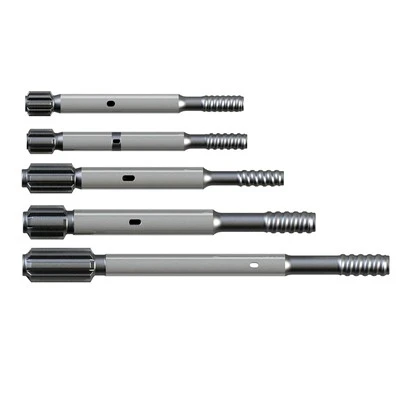
Don’t get stuck with the wrong adapter. Your tools and your projects deserve better. Hit us up to chat through what you need, and let’s make sure your shank fits every time.
Shank Adapters References:
- Industrial Tool Shank Standards, National Institute of Standards and Technology, 2022
- Shank Adapter Durability Testing Protocols, Construction Tools Journal, Volume 18, Issue 4, 2021
- Custom Shank Adapter Solutions, Small Manufacturing and Repair Association, 2023
Super Rock Machinery Equipment (Qingdao) Co., Ltd.
We are one of the most professional shank adapters manufacturers and suppliers in China, featured by quality products and good price. Please feel free to buy advanced shank adapters for sale here from our factory. Welcome to view our website for more information.
Address: No. 45, Pengwan Road, Qianwan Bonded Port Area, Qingdao Sub-district, Free Trade Pilot Zone, Shandong China
E-mail: sales@superrocktools.com
WebSite: https://www.superrocktools.com/
