Hey there! I’m a supplier of milling machines, and today, I wanna chat about the difference between a CNC milling machine and a conventional milling machine. It’s a topic that comes up a lot when folks are looking to buy a milling machine, so I thought I’d break it down in a way that’s easy to understand. Milling Machine
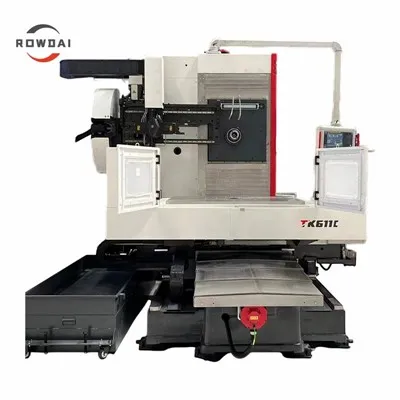
Let’s start with the conventional milling machine. You know, these are the old – school ones that have been around for ages. They’re pretty straightforward in terms of how they operate. You’ve got an operator who’s in control of the whole process. They use handwheels to move the table and the cutter in different directions. It’s like a hands – on, manual job.
One of the big advantages of a conventional milling machine is its simplicity. If you’re just starting out in machining or you’re working on small – scale projects, it’s a great option. You don’t need to be a tech wizard to use it. All you need is a basic understanding of how to move the parts and how to set up the cutter.
For example, if you’re making a simple bracket or a small part for a DIY project, a conventional milling machine can get the job done. You can adjust the speed and feed rate manually, which gives you a lot of control over the machining process. And if something goes wrong, you can quickly react and make changes on the spot.
Another plus is the cost. Conventional milling machines are generally cheaper to buy and maintain. There are no complex computer systems or software to worry about. You just need to keep the machine lubricated, change the cutters when they wear out, and you’re good to go.
But, of course, there are also some downsides. The accuracy of a conventional milling machine depends a lot on the skill of the operator. If the operator makes a small mistake, like turning the handwheel a little too much, it can affect the final product. And when it comes to making complex parts with intricate shapes, it can be really challenging. You might have to do a lot of trial – and – error, which can be time – consuming and waste a lot of material.
Now, let’s move on to CNC milling machines. CNC stands for Computer Numerical Control. These machines are controlled by a computer program. You create a design on a computer using special software, and then the machine follows the instructions to make the part.
The biggest advantage of a CNC milling machine is its precision. The computer controls the movement of the cutter and the table with extreme accuracy. It can repeat the same operation over and over again with very little variation. This is great for mass – production. If you need to make a hundred or a thousand of the same part, a CNC milling machine can do it quickly and with consistent quality.
CNC milling machines are also much better at handling complex shapes. The software can create 3D models and tell the machine how to move the cutter to create those shapes. You can make parts with curves, angles, and holes in all sorts of places. It’s like the machine is an artist, following the digital blueprint to create a perfect masterpiece.
Speed is another benefit. Once the program is set up, the CNC milling machine can work much faster than a conventional one. It doesn’t get tired or make mistakes due to fatigue. It can run 24/7 if you need it to, which can really increase your productivity.
However, CNC milling machines also have their own drawbacks. First of all, they’re more expensive to buy. You’re not just paying for the machine itself but also for the software and the computer system that controls it. And the maintenance can be a bit more complicated. You need to have someone who knows how to program the machine and troubleshoot any software or hardware issues.
Training is also a big factor. It takes time and effort to learn how to use CNC software and program the machine. You can’t just jump in and start using it right away like you can with a conventional milling machine.
In terms of applications, conventional milling machines are still widely used in small workshops, schools, and for hobbyist projects. They’re great for learning the basics of machining and for making one – off or small – batch parts. On the other hand, CNC milling machines are the go – to choice for large – scale manufacturing, aerospace, automotive industries, and other fields where high precision and mass production are required.
So, when you’re deciding between a CNC milling machine and a conventional milling machine, you need to think about your needs. If you’re on a tight budget, just starting out, or working on simple projects, a conventional milling machine might be the best option. But if you’re looking to improve productivity, make complex parts with high precision, and do large – scale production, then a CNC milling machine is the way to go.

As a milling machine supplier, I’ve helped a lot of customers make this decision. I’ve seen the benefits that both types of machines can bring. And I’d love to help you make the right choice for your business or project. If you’re interested in learning more about our milling machines, whether it’s a conventional one or a CNC one, don’t hesitate to reach out. We can have a chat about your specific requirements, and I’ll do my best to find the perfect machine for you.
Boring And Milling Machine References:
- Machining Handbook, various editions
- Industry – specific trade magazines on manufacturing and machining
Henan Rowdai Machinery Equipment Co., Ltd.
As one of the most professional milling machine manufacturers in China, we’re featured by quality products and good price. Please rest assured to buy high-grade milling machine for sale here from our factory. If you have any enquiry about cooperation, please feel free to email us.
Address: Building 9, E-Commerce Industrial Park, High-Tech Zone, Zhengzhou, Henan, China
E-mail: rowdai@rowdai.com
WebSite: https://www.rowdai.com/
