As a supplier of En1092 – 1 Flanges, I often encounter customers who are confused about the differences between En1092 – 1 Flanges and JIS flanges. This blog aims to delve into the specific details of these two types of flanges, helping you understand their disparities and make informed decisions when it comes to procurement. En1092-1 Flange
1. Design and Standards
En1092 – 1 is a European standard that defines a comprehensive set of flange types, dimensions, and pressure – temperature ratings. These flanges are designed to meet the strict industrial requirements across Europe and are widely used in various industries, including oil and gas, chemical, and power generation. The standard provides a high level of precision and consistency in terms of design, ensuring that flanges can be used interchangeably within the European industrial framework.
On the other hand, JIS (Japanese Industrial Standards) flanges are made according to the standards set by Japan. They are deeply influenced by Japanese engineering philosophy and industrial needs. JIS flanges are well – known in Asian markets, especially in Japan, South Korea, and some Southeast Asian countries. These flanges often have unique features that cater to the specific operating conditions and applications in these regions.
One of the most significant differences lies in the dimensional tolerances. En1092 – 1 flanges generally have tighter dimensional tolerances. For example, the outer diameter and bolt circle diameter of En1092 – 1 flanges are specified with a relatively small margin of error. This high precision is crucial in applications where a perfect fit is required, such as in high – pressure pipelines. In contrast, JIS flanges may have slightly looser tolerances, which allows for more flexibility in some installation situations.
2. Flange Types
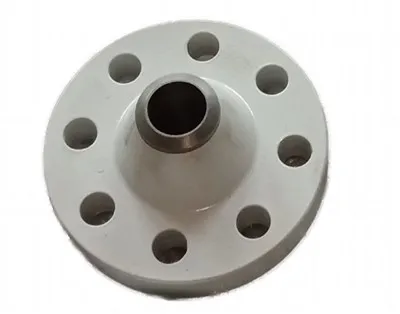
En1092 – 1 flanges come in a wide variety of types, including weld – neck flanges, slip – on flanges, blind flanges, socket – weld flanges, and threaded flanges. Weld – neck flanges are especially popular in high – pressure and high – temperature applications. Their long tapered neck provides excellent stress distribution, making them suitable for critical pipeline systems. Slip – on flanges, on the other hand, are easier to install and are commonly used in low – pressure systems.
JIS flanges also have a range of types, but their emphasis may be different. For instance, JIS has a unique type of flange called the JIS Class 10K and Class 20K flanges. These flanges are specifically designed for low – to medium – pressure applications. They are often used in general industrial piping, water supply systems, and heating systems in Japan. Compared to En1092 – 1 flanges, the JIS Class 10K and 20K flanges may have a more simplified design, which can reduce costs in some cases.
3. Pressure – Temperature Ratings
The pressure – temperature ratings of En1092 – 1 and JIS flanges are determined by different methods and criteria. En1092 – 1 uses a complex system that takes into account factors such as the material of the flange, the type of connection, and the intended service conditions. The pressure – temperature ratings are clearly defined in the standard, allowing engineers to accurately select the appropriate flange for a given application.
JIS flanges have their own set of pressure – temperature ratings. In general, the ratings of JIS flanges are more focused on the typical operating conditions in Japanese industries. For example, in some JIS standards, the pressure – temperature ratings may be based on the assumption of relatively stable operating temperatures and pressures compared to the more diverse range of conditions considered in En1092 – 1. As a result, when using JIS flanges for applications outside of their typical environments, extra care must be taken to ensure that the flanges can withstand the actual pressures and temperatures.
4. Material Usage
Both En1092 – 1 and JIS flanges can be made from various materials, such as carbon steel, stainless steel, and alloy steel. However, the specific material grades and their usage may differ.
En1092 – 1 often specifies a wide range of European – standard materials. For carbon steel flanges, materials like P235GH and P265GH are commonly used. These materials have been tested and approved for use in European industries and are known for their reliability and performance. Stainless steel En1092 – 1 flanges may be made from grades such as 1.4301 (AISI 304) and 1.4401 (AISI 316), which offer good corrosion resistance in different environments.
JIS flanges, on the other hand, use Japanese – standard materials. For carbon steel flanges, SS400 is a common material. It is a general – purpose structural steel that is widely used in Japanese industries. In the case of stainless steel JIS flanges, SUS304 and SUS316 are frequently employed. These materials are equivalent to their international counterparts but may have slightly different chemical compositions and mechanical properties due to the differences in Japanese manufacturing processes and standards.
5. Face Types
En1092 – 1 flanges have several face types, including flat face (FF), raised face (RF), and ring joint face (RTJ). The flat face is suitable for low – pressure applications and is often used with non – metallic gaskets. The raised face provides a better sealing surface and is commonly used in medium – to high – pressure applications. The ring joint face is designed for high – pressure and high – temperature applications and uses metal ring gaskets for sealing.
JIS flanges also have different face types. The most common ones are the flat face and the raised face. However, the dimensions and profiles of these face types may differ from those of En1092 – 1 flanges. For example, the height of the raised face in JIS flanges may be different from that in En1092 – 1 flanges, which can affect the selection of gaskets and the overall sealing performance.
6. Bolt Holes and Bolt Patterns
The bolt holes and bolt patterns of En1092 – 1 and JIS flanges are another area of difference. En1092 – 1 flanges follow a specific pattern of bolt hole sizes, numbers, and pitch circles. These patterns are designed to ensure proper alignment and tightening of the bolts, which is crucial for the integrity of the flange connection.
JIS flanges have their own bolt hole and bolt pattern standards. The number of bolt holes, their diameters, and the pitch circle diameters may be different from those of En1092 – 1 flanges. This means that bolts and nuts used for En1092 – 1 flanges may not be directly compatible with JIS flanges, and vice versa.
Why Choose En1092 – 1 Flanges?

As a supplier of En1092 – 1 flanges, I can attest to their many advantages. En1092 – 1 flanges offer high precision and quality, which is essential for applications that require strict compliance with international standards. Their wide range of types and materials allows for flexibility in various industrial applications. Whether you are working on a high – pressure pipeline project in the oil and gas industry or a chemical processing plant, En1092 – 1 flanges can provide the reliability and performance you need.
Ansi B16.47 Fange If you are in the process of selecting flanges for your project, I encourage you to consider En1092 – 1 flanges. We have a team of experts who can help you choose the right type, material, and size of flanges based on your specific requirements. If you have any questions or are interested in procurement, feel free to contact us. We are ready to have in – depth discussions with you and provide you with the best solutions.
References
- European Committee for Standardization. (Year). EN 1092 – 1: Flanges and their joints – Circular flanges for pipes, valves, fittings and accessories, PN designated – Part 1: Steel flanges.
- Japanese Standards Association. (Year). JIS B2220: Pipe flanges and flanged pipe joints.
Shanxi Xinshunda Flange Manufacturing Co., Ltd.
As one of the most professional en1092-1 flange manufacturers and suppliers in China, we also support customized service with competitive price. We warmly welcome you to wholesale high quality en1092-1 flange for sale here from our factory. For quotation, contact us now.
Address: Zhunagli Industrial Zone,jinchang Town,dingxiang,shanxi,china
E-mail: sales01@xinflange.com
WebSite: https://www.xinflange.com/
