Hey there! I’m a supplier of concentric butterfly valves, and I often get asked how these valves stack up against ball valves. Since both are pretty common in fluid control systems, it’s important to understand the differences. So, let’s dive right in and see what makes each of them tick and how they compare. Concentric Butterfly Valve
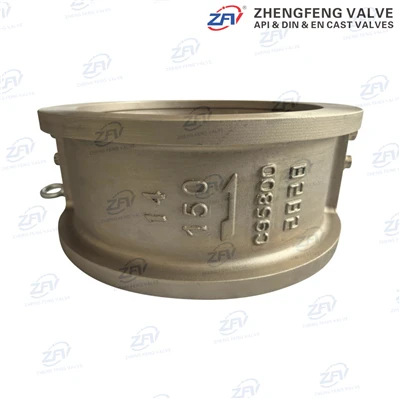
Structure and Design
First off, let’s take a look at their basic designs. A concentric butterfly valve is simple in its structure. It’s got a circular disc that rotates on a shaft in the center of the valve body. When the disc is turned parallel to the flow, the valve is wide open. And when it’s turned perpendicular, the flow is blocked. It’s a straightforward setup, which doesn’t need a lot of space. It’s also relatively lightweight compared to some other valves, making it a breeze to install and handle.
On the flip side, a ball valve has, well, a ball in it. This ball has a hole through the middle. When the valve is open, the hole lines up with the flow path, allowing the fluid to pass through. To close the valve, you just turn the ball a quarter – turn so the hole is perpendicular to the flow. Ball valves usually have a more compact round body, and they can come in different end connections like threaded, flanged, or welded.
Flow Control
One of the big things folks care about in a valve is how well it controls the flow of fluids. Concentric butterfly valves are great for applications where you don’t need super – precise flow control all the time. They can handle a pretty high flow rate when fully open. The disc design allows the fluid to flow smoothly through the valve, with only a small pressure drop. But in terms of throttling (adjusting the flow rate), they’re not as accurate as ball valves. The relationship between the disc’s rotation angle and the flow rate isn’t always linear, so it can be a bit tricky to get a really specific flow rate.
Ball valves, on the other hand, are excellent for precise flow control. The quarter – turn action gives a clear on – off control, and when used for throttling, they offer a more predictable linear flow rate adjustment. This makes them a top choice for applications where accurate flow regulation is a must, like in chemical dosing systems or high – precision industrial processes.
Sealing Performance
Sealing is another crucial factor. A concentric butterfly valve uses a rubber or elastomeric seat to seal against the disc. This provides a good seal, especially at low to moderate pressures. But over time, the rubber seat can wear out, especially if it’s exposed to harsh chemicals or high – temperature fluids. Also, these valves may not be able to achieve a perfect bubble – tight seal, which can be a problem in some applications where leakage is a no – go.
Ball valves are known for their excellent sealing performance. The ball and seat are often made from materials like stainless steel or polymers, which can withstand a wide range of temperatures and pressures. Many ball valves can achieve a bubble – tight seal, meaning there’s virtually no leakage. This makes them ideal for applications where preventing even the slightest leak is critical, such as in gas pipelines or high – value fluid storage systems.
Pressure and Temperature Resistance
When it comes to handling pressure and temperature, both valves have their strengths and weaknesses. Concentric butterfly valves are generally good for low to moderate pressure applications. They can handle pressures up to around 150 psi (pounds per square inch) without a problem. When it comes to temperature, they’re typically suitable for applications where the fluid temperature is between – 20°F and 250°F ( – 29°C and 121°C), depending on the seat material.
Ball valves, however, can handle much higher pressures and temperatures. They can handle pressures well over 1000 psi and can operate in a wider temperature range, sometimes from – 40°F to 500°F ( – 40°C to 260°C) or even more, depending on the materials used. So, if you’re dealing with high – pressure or high – temperature fluids, ball valves are a better bet.
Cost
Cost is always a major consideration. Concentric butterfly valves are usually more budget – friendly. They’re simpler in design, which means lower manufacturing costs. Plus, they’re lightweight and easy to install, so you can save on installation labor as well. This makes them a great choice for large – scale projects where you need a lot of valves and cost is a deciding factor.
Ball valves, on the other hand, are generally more expensive. Their more complex design, better sealing performance, and higher pressure and temperature capabilities all contribute to the higher price tag. But if you need the precision and reliability that ball valves offer, the extra cost might be worth it.
Maintenance
Maintenance is also key to keep your valves in good working condition. Concentric butterfly valves are relatively easy to maintain. Since they have fewer moving parts, there’s less that can go wrong. Replacing the seat is usually a simple task that doesn’t require a lot of special tools or expertise.
Ball valves also don’t require a ton of maintenance, but they can be a bit more complex to service. If the ball or seat gets damaged, it might be more difficult and costly to replace them compared to the disc and seat of a butterfly valve.
Application Scenarios
Given their characteristics, each valve is better suited for different applications. Concentric butterfly valves are often used in HVAC (heating, ventilation, and air – conditioning) systems, water treatment plants, and some general industrial processes where cost – effectiveness and high – flow applications are the priority. They’re also great for on – off applications where precise flow control isn’t essential.
Ball valves, on the other hand, are commonly used in the oil and gas industry, chemical processing plants, and food and beverage production. These industries require high – precision flow control, excellent sealing, and the ability to handle extreme pressures and temperatures.
Wrapping Up

So, to sum it up, both concentric butterfly valves and ball valves have their own unique pros and cons. If you’re on a tight budget, need a valve for general – purpose, low – to – moderate pressure applications, and don’t need super – precise flow control, then a concentric butterfly valve is a great choice. On the other hand, if you need accurate flow regulation, a bubble – tight seal, and the valve needs to handle high pressures and temperatures, a ball valve is the way to go.
Butterfly Valve As a supplier of concentric butterfly valves, I can tell you that our valves are top – notch. They’re made with high – quality materials and go through strict quality control processes. If you’re in the market for valves and think a concentric butterfly valve might be what you need, or you just want to learn more about the differences between the two types of valves, feel free to reach out. I’m here to help you make the right choice for your specific application. Let’s chat and see how we can work together!
References
- Crane, D. R. (2007). Crane Technical Paper No. 410M: Flow of Fluids. Crane Co.
- Walas, S. M. (1990). Chemical Process Equipment: Selection and Design. Butterworth – Heinemann.
Zhejiang Zhengfeng Valve Co., Ltd.
We’re well-known as one of the leading concentric butterfly valve manufacturers and suppliers in China. With abundant experience, we warmly welcome you to buy bulk advanced concentric butterfly valve from our factory. If you have any enquiry about cooperation, please feel free to email us.
Address: Hengtong Road, Wuxing Industrial Park, Wenzhou, Zhejiang, China. 325105
E-mail: sales@zfvalve.com
WebSite: https://www.zfvcns.com/
